
 Image 1 of 1
About Higher Frequency Living Sound Baths
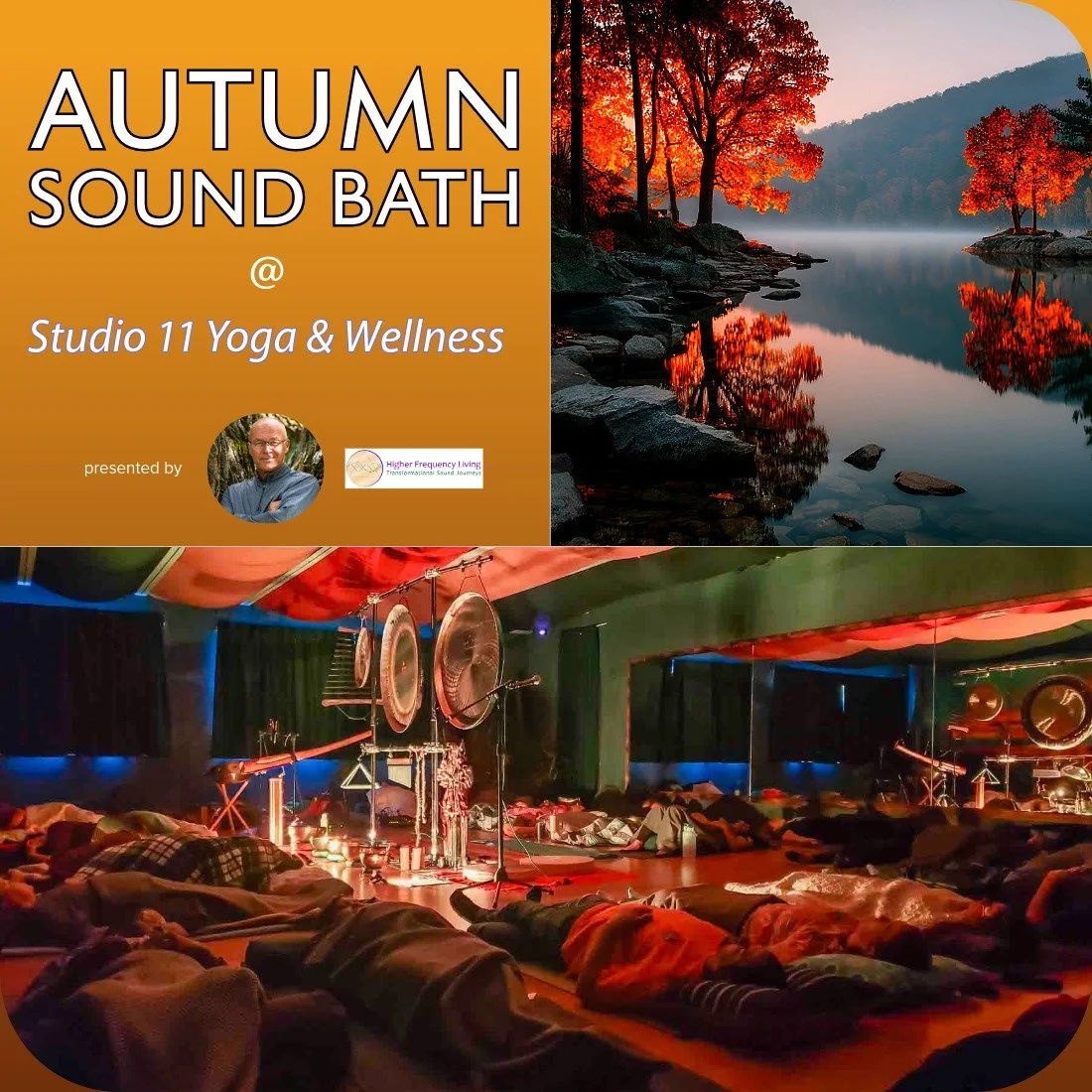
A sound bath is a meditation you do lying down. No water, no swimsuit, nothing to chant, no posture to hold. You come in, get comfortable, and listen while instruments are played live around the room.
I'm Marian Kraus. Since 2011 I've been leading these evenings in yoga studios, wellness centers, and holistic spaces across the Chicago area. On a given night I might play large titanium and bronze gongs, Himalayan singing bowls, handpan, didgeridoo, shruti box, drums, chimes, jaw harp, monochord, and voice. The room and the group determines which.
How an evening goes
The shape is always the same. We open with a short guided meditation — five to ten minutes, long enough to slow the breath and let the day fall away. Then the instruments begin, and they don't stop. Most evenings run about 90 minutes, beginning to end.
What these instruments share is that their sound keeps going. A gong struck once produces overtones long after the mallet has left it. A monochord does the same. There's no verse, no chorus, nothing to count. Attention goes looking for something to follow, doesn't find it, and eventually stops looking. That's the doorway.
What people describe afterward
It usually shows up two ways. One is loosening — the breath lengthens on its own, the shoulders drop a half inch you didn't know they were holding, the mental to-do list stops running long enough to notice it's gone quiet. The other is closer to waking up rather than winding down: people often leave the room more alert than they arrived, thinking more clearly, carrying an energy that isn't caffeine and isn't adrenaline. Which one shows up for you isn't something you have to manage. Both are the sound doing its work.
What the research shows
Early, small-scale, and encouraging. A 2017 observational study reported less tension, anger, and fatigue after a single singing-bowl session. A 2023 randomized trial found reduced anxiety and improved heart rate variability after one session compared with control conditions, and a 2025 randomized trial of a four-week daily sound meditation program reported lower anxiety and lower salivary cortisol. Worth knowing — and worth saying plainly: this is rest and restoration, not medical treatment.
Questions people ask
What actually happens at a sound bath?
You come in, find a spot on the floor, and stay there — no mat work, no poses, nothing physical required beyond lying down. The evening opens with a short guided meditation, then moves into about an hour of continuous live sound from gongs, singing bowls, handpan, didgeridoo, and other instruments played around the room. You're not performing any technique. You're simply present for it.
Do I need meditation experience?
None. This is one of the few contemplative practices that asks nothing of a first-timer, and there's no way to do it incorrectly. People who've given up on seated meditation often do well here, because the sound carries your attention instead of asking you to carry it.
What should I wear and bring?
Loose layers and socks. An hour of lying still drops your body temperature more than you'd expect, so bring more warmth than seems necessary. Mats and blankets are usually provided by the venue. A pillow, bolster, eye mask, or water bottle are all welcome. Arrive 10–15 minutes early so you're settled before we begin, and eat something light beforehand rather than a full meal.
What if I fall asleep?
Common, and completely fine. Dozing off doesn't mean you missed anything — the sound goes on reaching you, and the people who sleep often report the deepest rest in the room. Nothing here requires you to stay awake or keep track of the experience.
Is there anyone who shouldn't attend?
Sound baths are meant to be restful, but the sound is real and at moments substantial. Please let me know ahead of time if you're pregnant, have a pacemaker, a seizure disorder, marked tinnitus or sound sensitivity, or a sensitivity to essential oils or incense — I'll set you up further back from the instruments. If a medical condition makes you unsure, check with your physician before booking.
More questions answered on the full FAQ page →
First time?
A sound bath doesn't ask anything of a beginner — no technique, no posture, no way to get it wrong. If you've tried seated meditation and found the quiet harder than it should be, this tends to be easier, because the sound gives your attention something to rest on instead of asking you to hold it yourself. Longtime meditators and first-timers end up on the same floor for the same ninety minutes, and both leave having gotten exactly what they came for. If you'd like to go deeper beforehand, you can read about vibration, explore the field of Cymatics, or watch gong and sound meditation videos on the movies page.
Higher Frequency Living sound baths are open to everyone. Upcoming dates and venues are on the schedule.
Or come one-on-one
I also work with individuals privately, combining sound with focused conversation drawn from the principles of TED* (The Empowerment Dynamic) and Dr. David Hawkins' Map of Consciousness. That's the better fit when you're moving through a specific transition, weighing a decision, or stuck somewhere — rather than looking for an evening of rest and renewal. Private sessions are held in Warrenville, IL. Read more here.
Coordinates