
Standing at the Threshold: Co-Creating 2026 from the Wisdom of What Was
As I write these words to you three weeks into this new year, I'm acutely aware that we're all standing at a threshold together. Not the manufactured threshold of a calendar turning—though that, too, has its symbolic power—but the deeper threshold that exists when we collectively pause to ask: Who have we been? Who are we becoming? And what must we release to step fully into what calls us forward?
The past six months of my own life have been a crucible of transition—navigating the vicissitudes that life occasionally delivers with surgical precision, moments that strip away everything except what's essential. And in those raw spaces, I've come to understand something profound: we are never alone in our becoming.
In preparation for this message, I reached out to friends, clients, and fellow travelers on this path, asking three simple questions: What one word captures your experience of 2025? What one word represents your vision for 2026? And what one word describes what you're ready to release?
The responses were nothing short of revelatory—not because they were unique to any individual, but because they revealed our shared humanity with such crystalline clarity.
The Mirror of Our Collective Experience

Growth as a human community
When I laid out the responses to that first question—How would you describe 2025?—a pattern emerged that likely mirrors your own journey:
Challenge. Pain. Terror. Grief. Immobility. Transition.
These weren't the dominant words, but they carried the heaviest emotional weight. They spoke to the year's capacity to break us open, to ask more of us than we thought we could give, to unmoor us from certainty.
Yet woven through were different threads: Discovery. Expansion. Presence. Insights. Love. Humility. Opportunity. Revelation.
Do you see it? The paradox that defines the human experience—simultaneous wounding and awakening, constriction and expansion, loss and discovery. We walked through 2025 holding both grief and grace, often in the same breath.
This is the binding truth of our shared condition: we are all navigating complexity that refuses simple categorization. The world offers us chaos—ecological crisis, systemic manipulation, economic uncertainty, social fracture—and we must somehow alchemize it into wisdom without losing our hearts in the process.
What We're Calling Forward
The second question—What's your vision for 2026?—revealed our collective longing:
Flow. Balance. Joy. Peace. Harmony. Hope. Evolution. Expansion. Connection. Progress. Purpose.
Notice the energetic shift? From survival to thriving. From endurance to flourishing. From coping to creating.
We're not asking for perfection. We're asking for movement—the kind that feels aligned rather than forced, organic rather than manufactured. We're asking to step into our fuller capacity, to experience the synchronicity that emerges when we're vibrationally aligned with our deeper calling.
And what must go for this to happen? The third question revealed our shared burdens:
Procrastination. Distrust. Anxiety. Stress. Limitations. Control. Frustration. Distractions. Guilt. Self-persecution.
These aren't character flaws—they're protection mechanisms that have outlived their usefulness. They're the armor we donned when we needed it, now grown too heavy to carry into the future we're building.
Understanding the Challenge: Why Change Feels So Hard

Onward, forward and upward…
Here's where I need to be brutally honest with you: transformation is not easy, and it does not happen overnight—unless you experience a quantum leap in consciousness.
For most of us, it's arduous work. Daily work. Work that demands vigilance, desire, and unwavering commitment.
And the reason? Your brain.
Research from the National Science Foundation reveals a sobering truth: approximately 90-95% of our daily thoughts are repetitive. We're literally recycling the same thought patterns, the same neural grooves, day after day. Of those thoughts, 80% are negative—not because you're pessimistic, but because your brain is hardwired for survival, defaulting to threat detection.
Think about it: you have between 12,000 and 60,000 thoughts per day. That means potentially 11,400 to 57,000 of those are thoughts you've already thought before. You're essentially running autopilot, your consciousness hijacked by habitual patterns established over years, sometimes decades.
But here's the even more critical piece: your unconscious mind is processing 11 million bits of information per second, while your conscious mind can only handle 40-50 bits per second. That's a factor of 220,000. Your unconscious is running the show—filtering, deciding, acting—while your conscious awareness is essentially operating blind, catching only the tiniest fraction of what's actually happening.
This means that 90% of your life is being run by automatic subconscious patterns that you're not even aware of. You're not consciously choosing procrastination, anxiety, or distraction. Your reptilian brain—your limbic system—is making those choices for you.
The Amygdala Hijack: When Your Survival Brain Takes Over
Adding another layer of complexity: your amygdala—that almond-shaped cluster deep in your brain responsible for threat detection and survival—operates on what neuroscientists call the "low road" pathway.
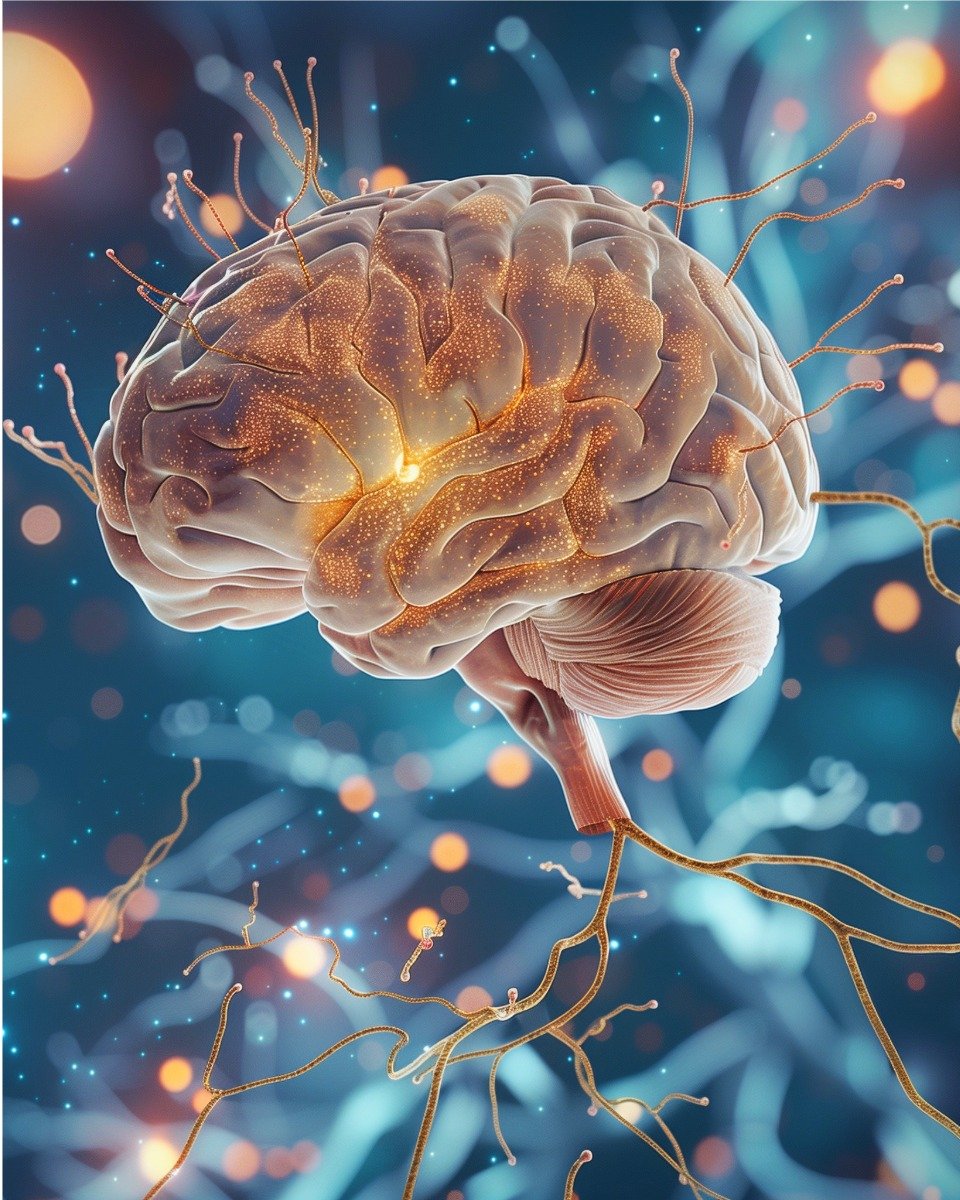
Becoming aware….awakening
Here's what happens: a potential threat registers in your environment. That signal travels to your thalamus (the sensory relay station) and goes directly to your amygdala before it reaches your prefrontal cortex—the part of your brain responsible for rational thinking, impulse control, and wisdom. Your amygdala activates the fight-flight-freeze response in milliseconds, often before you're even consciously aware a threat exists.
This is the "amygdala hijack"—a term coined by psychologist Daniel Goleman. During a hijack, blood and oxygen flow away from your prefrontal cortex and toward your amygdala. Your rational mind goes offline. Your emotional reactivity takes over as your brain triggers and releases Adrenaline and Cortisol, the stress hormones. You snap at someone, avoid that important conversation, or spiral into catastrophic thinking—and only afterward think, "What was I thinking?"
The problem? In modern life, we're experiencing frequent amygdala hijacks to threats that aren't actually life-threatening: a critical email, financial uncertainty, social conflict, news headlines. Your brain can't tell the difference between a charging tiger and a Zoom call with your boss. The same survival mechanism fires.
And if you've experienced chronic stress or trauma, your amygdala becomes hyperactive—more easily triggered, slower to calm down. The threshold for what sets it off gets lower and lower.
This is why conscious awareness becomes your greatest tool: you must literally train yourself to wake up in the moment and recognize when you're being hijacked by your survival brain. You must catch the amygdala firing before it completely disables your rational mind.
The Framework for Transformation: Rigorous, Daily Work
So how do we move from this automatic, repetitive, hijack-prone state to genuine freedom? How do we become the architects of our lives rather than victims of our own neurobiology?
The answer is both simple and demanding: deliberate, repetitive practice that creates new neural pathways.
Research on neuroplasticity shows that you cannot create a new personal reality as the same personality. You must literally become someone else—someone who thinks different thoughts, demonstrates different behaviors, embodies different emotions. And you do this through repetition until the new pattern becomes automatic.
This is neuroplasticity: the brain's ability to form new neural connections. Every time you consciously choose a different thought, a different response, a different behavior, you're literally rewiring your brain. You're creating new grooves while allowing the old ones to atrophy through disuse.
But here's the non-negotiable part: it takes consistent, deliberate practice.
Not sporadic meditation. Not occasional positive thinking. Not inspiration that lasts for three days before fading. You need daily practice, sustained over time, approached with the same professional commitment an athlete brings to training.
Understanding Letting Go: The Neuroscience and the Soul Work

Waste no time in letting go
Letting go isn't about forcing yourself to stop caring or thinking about something. Research on rumination and repetitive negative thinking shows that the inability to release—to keep cycling through the same thoughts and emotional patterns—creates distinct neural pathways that become self-reinforcing. The more you ruminate, the deeper the groove.
True letting go involves creating new neural patterns while allowing the old ones to naturally atrophy. You're not fighting the old pattern; you're simply building a stronger, more habitual new one.
The invitation is this: Who would you need to become for anxiety to simply not make sense anymore? For procrastination to feel foreign? For the need to control everything to dissolve?
When you shift your state of being—your "state of consciousness"—everything changes. Your brain begins firing in new sequences, producing different neurochemicals, signaling your body to feel differently. The old patterns lose their power not because you're fighting them, but because they've been replaced by something stronger and more aligned.
Co-Creating Reality: More Than Positive Thinking
Abraham Hicks teaches that deliberate creation happens through vibrational alignment. You don't make things happen through force or manipulation. You allow them to manifest by matching their frequency.
Every desire you've ever had—for flow, balance, joy, connection, purpose—already exists vibrationally. Your only work is to close the vibrational gap between where you are and where it is. How? By consistently choosing thoughts and emotions that feel like relief. By focusing on what's working rather than obsessing over what isn't. By practicing the art of allowing rather than the exhaustion of efforting.
This isn't bypassing the real challenges we face. It's refusing to let those challenges define your energetic state. It's recognizing, as the Stoics understood, that we have power over our minds, not external events—and realizing this is where we find strength.
We also need to recognize "Resistance" the force that keeps us stuck—that inner saboteur that uses fear, rationalization, distraction, and self-criticism to prevent us from doing our most important work. The author Steven Pressfield has written beautifully and extensively about it. The antidote? Show up anyway. Do the work even when you don't feel like it. Treat your transformation like a professional treats their craft: with daily discipline and unwavering commitment, regardless of mood or circumstance.
The Synchronicities: Fuel for Forward Motion
Here's what happens when you commit to this daily practice: life begins to validate your efforts.
Small synchronicities appear. A conversation at just the right moment. An unexpected opportunity. A meeting with someone who reminds you of what's possible. A random thought that becomes the answer to something you've been pondering.
These aren't accidents. They're the universe mirroring back to you that you're operating at a new frequency.
These synchronicities become fuel. They're the evidence that something is shifting. When you notice them—truly notice them—they reinforce your commitment to the practice. They give you a reason to keep going on the days when the work feels hard.
But here's the essential truth: even as you're experiencing synchronicities and flow, you'll still have difficult moments.

The sun always shines, and clouds move away
On a sunny day, clouds still pass through the sky. On a day of abundance and connection, you might still experience a moment of anxiety or doubt. This isn't failure. This isn't proof that the work isn't working. This is the human condition. We're embodied beings navigating a complex world. Difficult emotions and challenging moments are part of the landscape.
The practice isn't about eliminating all shadow. It's about recognizing that the sun always shines, and the clouds are temporary. When anxiety or old patterns resurface, you simply notice them, acknowledge them, and return to your practice.
Daily Practices for Transformation
Theory means nothing without practice. Here are concrete ways to embody this transformation—remembering that consistency matters far more than perfection:
Morning Reflection Questions (Start your day with intention and consciousness)
Before reaching for your phone, before your amygdala has a chance to hijack the day, ask yourself:
What quality do I want to consciously embody today? (Courage? Patience? Joy? Presence? Wisdom?)
What am I genuinely grateful for right now, in this exact moment?
How can I serve my highest purpose today, even in small ways?
What would it feel like to move through this day from a place of alignment rather than unconscious reaction?
When my survival brain gets triggered today—and it will—how do I want to respond?
Who do I choose to be today, regardless of what unfolds?
Conscious Awareness Throughout the Day: Catching the Hijack
This is your most important practice: becoming aware of when you're being unconscious.
indispensable: Introspection and reflection
Notice when you shift into autopilot. Notice when anxiety rises. Notice when you're procrastinating or being defensive. These are moments when your amygdala has taken over, when your conscious mind has gone offline.
When you catch it—and at first you'll only catch it after it's happened, and that's fine—simply pause. Take three deep breaths. Ask yourself: Is this threat real? Or is my survival brain overreacting to something that isn't actually dangerous?
Often, the answer is the latter. Your prefrontal cortex comes back online. Your nervous system settles. You get to choose your response rather than being hijacked by it.
This catching-yourself moment is the entire game. Every time you do it, you're strengthening new neural pathways. You're proving to your brain that there's a different way.
Evening Reflection Questions (Close your day with awareness and compassion)
Before sleep, gently review your day:
Where did I show up as my highest self today? (Celebrate this—even small moments count)
Where did old patterns resurface, and how did I respond? (No judgment, only compassionate observation)
What did I learn about myself today?
Did I catch myself in an amygdala hijack? If so, did I eventually return to consciousness?
What am I ready to release from this day before I sleep?
What intention do I set for tomorrow's becoming?
These questions are powerful because they prime your brain for pattern recognition. You start noticing what you're looking for. And what you notice, you can consciously shift.
Sound and Vibrational Healing: Rewiring Through Frequency
Your voice is one of your most powerful healing instruments. Humming, chanting, or singing activates your vagus nerve—that crucial pathway connecting your brain to your body's relaxation response, effectively turning off your amygdala.
Morning practice: Three to five minutes of humming at 432 Hz (or your natural vocal tone) while focusing on your heart center. Feel the vibration throughout your body. This immediately shifts you from survival mode to creative mode.
Throughout the day: When stress or old patterns arise, pause for three deep breaths paired with humming on the exhale. This 60-second practice recalibrates your nervous system and returns you to consciousness.
Sound immersion: Spend 15-20 minutes weekly with healing frequencies—528 Hz (transformation and healing), 396 Hz (releasing fear), 741 Hz (awakening intuition). Whether through gong baths, sound bath meditations, singing bowls, recorded frequencies, or playing your own instrument. Intentional sound creates the optimal neural state for both deep rest and creative insight.
Research shows sound healing reduces anxiety by up to 58%, improves emotional regulation, and creates the optimal brain state for rewiring neural pathways. This is measurable neuroscience, not metaphysical theory.
Daily Meditation: The Foundation
Even 10 minutes of conscious, focused meditation creates measurable neurological changes:
Lowers cortisol and reduces inflammation
Improves focus and decision-making
Decreases anxiety symptoms significantly
Most importantly: strengthens your prefrontal cortex and weakens the hair-trigger amygdala response
Start small. Five minutes of focused breathing. Gradually extend as it becomes natural. The consistency matters infinitely more than duration. Five minutes daily for a year beats an hour of sporadic practice.
Philosophical Integration: Reigniting Your Thoughts

Re-igniting creative intelligence….daily
Marcus Aurelius wrote: "Your principles can't be extinguished unless you snuff out the thoughts that feed them, for it's continually in your power to reignite new ones... It's possible to start living again! See things anew as you once did—that is how to restart life!"
This is your invitation. Right now. Not when circumstances improve or when you feel more ready. Now—in this messy, imperfect, gloriously human moment—you can see things anew. You can reignite different thoughts. You can consciously choose to wire your brain differently.
Seneca taught that tranquility arises not from perfect external conditions, but from cultivating inner resources. The world's chaos isn't going away. The systems won't suddenly become benevolent. The uncertainties won't magically resolve.
But you can become unshakeable within the shaking. You can train your brain, through daily practice, to respond rather than react. You can become someone who lives from choice rather than compulsion.
2026: Collective Co-Creation Through Conscious Practice
Here's what I know to be true: we are more powerful together than we ever could be alone.
When we commit to daily practice—when we consciously train our brains to break free from automatic patterns—we don't just change ourselves. We change the field around us. We become living examples of what's possible. We literally raise the frequency of the collective consciousness.
Research on collective hope shows that shared commitment to transformation sustains motivation, provides a buffer against burnout, and creates positive feedback loops where small individual wins build into collective momentum.
When you sit in meditation, work with sound healing, or pause to catch yourself in an amygdala hijack, you're not just helping yourself. You're helping all of us. Your transformation ripples outward in ways you can't fully measure.
2026 asks us to remember: we're not meant to walk this path in isolation. Your healing serves the whole. Your decision to choose consciousness over unconsciousness, presence over distraction, love over fear—it changes the frequency of the entire collective.
A Personal Invitation
I share this with you not from a place of having arrived, but from the trenches of my own becoming. The past months have asked everything of me—to release identities I'd worn like skin, to trust when trust felt foolish, to keep choosing consciousness when unconsciousness seemed easier.
And what I've discovered is this: transformation isn't linear, it isn't neat, and it sure as hell isn't comfortable. But it's real. It's available to every one of us, in every moment we choose differently. And it requires our commitment, our vigilance, our daily return to the practice.
So as we stand here, three weeks into this year, I invite you to join me in a radical act: let's consciously co-create 2026 together through daily, dedicated practice.
Let's practice the morning and evening reflections. Let's catch ourselves in amygdala hijacks and return to consciousness. Let's use sound and stillness as tools for rewiring our brains. Let's notice the synchronicities that validate our efforts. Let's acknowledge the difficult moments without letting them derail us.
Let's remember: the sun always shines. The clouds are temporary. And the work of transformation—the daily, sometimes unglamorous, deeply courageous work—is what creates a life worth living.
The future isn't something that happens to us. It's something we're building with every conscious thought, every deliberate choice, every moment we wake up from the trance of autopilot living.
I'm honored to walk this path alongside you. Thank you for being part of this community, for showing up, for daring to hope and to evolve even when the world suggests we should hunker down and protect. Thank you for your commitment to the daily practice, knowing full well that real transformation requires exactly that: daily, vigilant, devoted practice.
Here's to flourishing in 2026—together, with purpose, with grace, and with the understanding that we are all working with the same brain, the same patterns, the same beautiful, challenging human condition. And we are all, every single one of us, capable of rewiring our consciousness one deliberate choice at a time.
With deep gratitude, infinite possibility, and genuine respect for your courage,
Marian
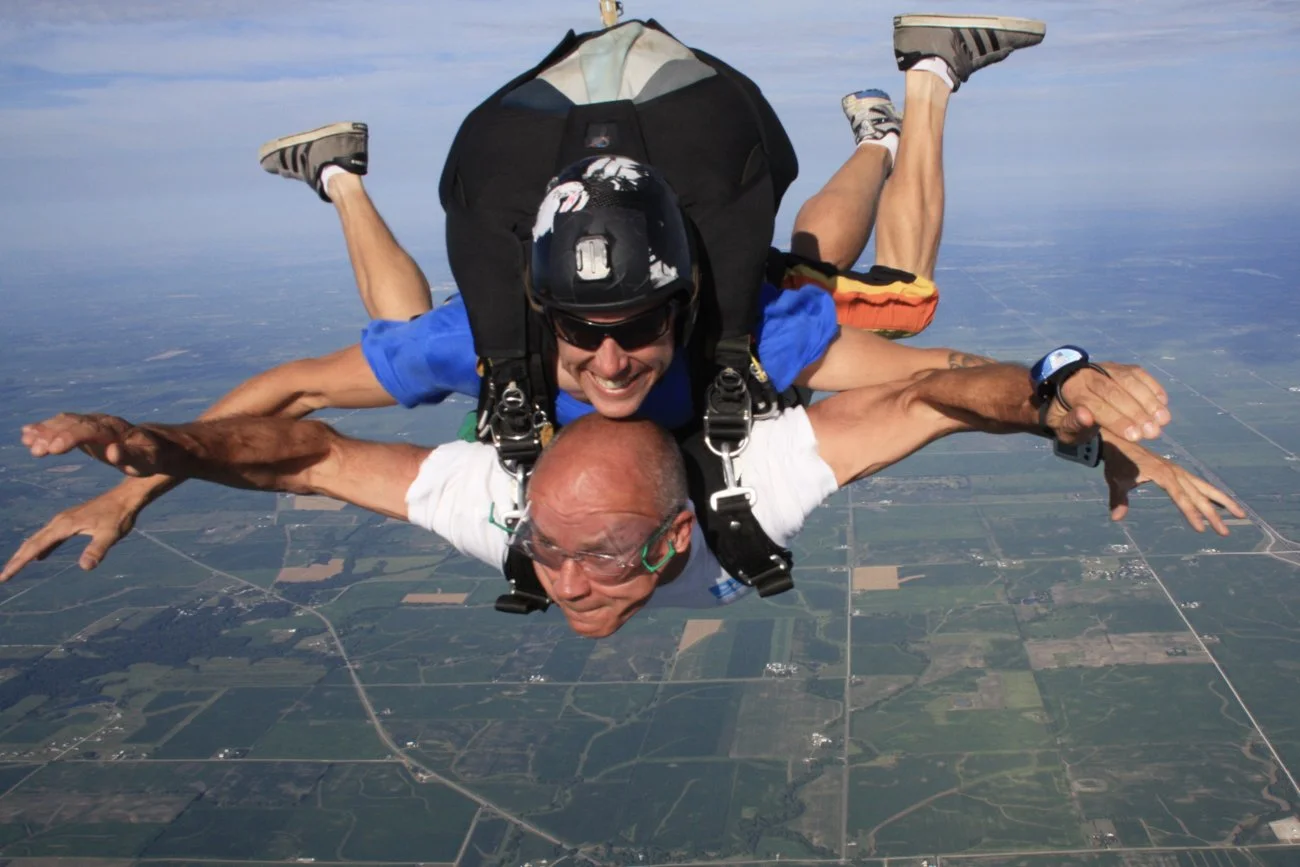
While overcoming one of my fears several years back….exhilarating freefall…welcome to Life ;)
This article is built on my own experiences and practices, as well as extensive research drawing from neuroscience, consciousness studies, Stoic philosophy, sound healing science, contemporary psychology, and research on collective hope, resilience, and deliberate creation. Key research from: Dr. Joe Dispenza (neuroplasticity), National Science Foundation (repetitive thought patterns), neuroscience literature (amygdala hijack, information processing), and contemporary wisdom traditions on conscious transformation.