
The Art of Stillness: Finding Balance in a World That Never Stops
In our relentlessly accelerated modern existence, we've become accustomed to perpetual motion—scrolling, planning, achieving, consuming. Yet beneath this frenetic surface lies a profound truth the ancient wisdom traditions understood intimately: stillness is not merely the absence of movement, but a sanctuary where we reclaim our essential humanity.

Our busy, hectic, non-stop world…
As the holiday season intensifies around us, with its swirl of obligations and expectations, we're reminded that the greatest gift we can offer ourselves isn't found in the frantic marketplace of activity. Rather, it resides in those sacred pauses—those deliberate moments when we step off the treadmill of doing and simply be.
The Crisis of Modern Disconnection
The statistics paint a sobering portrait of our collective struggle. According to the American Psychiatric Association's 2024 annual poll, 43% of U.S. adults report feeling more anxious than the previous year—a steady increase from 37% in 2023 and 32% in 2022. An estimated 44 million American adults experience near-daily anxiety, while 31 million grapple with depression, and disturbingly, nearly a third have never spoken to a healthcare provider about it
This isn't simply about individual distress. Research from the U.S. Census Bureau reveals that anxiety and depression symptoms skyrocketed from 11% to 40% between 2019 and 2020, and while rates have moderated, they remain significantly elevated. Moreover, 70% of Americans experience financial anxiety, and 77% cite economic concerns as major sources of stress. We're witnessing a collective nervous system overload—a society running on empty, desperately seeking the off-switch but unable to locate it.
Ancient Wisdom Meets Modern Understanding: The Map of Consciousness
Dr. Hawkins' “Map of Consciousness” offers illuminating insight into this predicament. His research, spanning over four decades and tracking more than 10,000 patients, calibrates consciousness on a logarithmic scale from 1 to 1000. At level 250, we encounter Neutrality—a pivotal threshold that marks transformation from reactive emotional states to something far more powerful.
Neutrality, Hawkins explains, is characterized by detachment, objectivity, and a conspicuous absence of judgment. At this level, individuals transcend egoic desires and fears, cultivating flexibility and an ability to observe situations without emotional reactivity. This is not indifference or apathy—rather, it's a state of profound inner confidence and well-being. Here, we discover genuine freedom because we're no longer dependent on outcomes; we don't collapse into anger or frustration when circumstances deviate from our expectations.
Neutrality creates what one spiritual teacher describes as "a flow of acceptance in your experience," allowing authentic peace regardless of external circumstances. It signals the completion of karmic patterns—when people or situations no longer generate emotional charge, when we've metabolized the lesson and can move forward unburdened.
The Stoic Path to Inner Stillness

The ancient Stoic Philosophers knew…
The Stoic philosophers—Epictetus, Seneca, and Marcus Aurelius—understood stillness not as withdrawal from life, but as mastery of inner sovereignty amidst chaos. Their teachings, forged in the crucible of slavery, political intrigue, and battlefield command, offer remarkably practical guidance for our contemporary struggles.
Marcus Aurelius, the philosopher-emperor who ruled Rome from 161 to 180 AD, practiced what scholars now recognize as a form of meditation—though vastly different from our contemporary understanding. His personal journal, the Meditations, reveals a nightly practice of reflection, self-examination, and realignment with virtue. He wrote: "You have power over your mind—not outside events. Realize this, and you will find strength".
This wasn't abstract philosophy. Marcus composed these reflections while commanding armies on the frozen frontiers, facing plague, betrayal, and the weight of an empire. His stillness practice wasn't an escape from responsibility—it was preparation for meeting it with wisdom and equanimity.
Seneca, writing in his profound essay On Tranquility of Mind, diagnosed the very condition afflicting modern society: animi disturbance—a restlessness of soul characterized by anxiety, worry, and disgust with life. His prescription? "The mind must be withdrawn from external interests into itself. Let it have confidence in itself, rejoice in itself".
Seneca understood that tranquility arises not from perfect external conditions, but from the cultivation of inner resources—wisdom, temperance, justice, and courage. He advised avoiding those "who are gloomy and always lamenting, and who grasp at every pretext for complaint," recognizing that our companions profoundly influence our inner state.
Pico Iyer and the Adventure of Going Nowhere

Going nowhere sometimes if OK
Travel writer Pico Iyer, in his meditation The Art of Stillness: Adventures in Going Nowhere, articulates a counterintuitive truth: "Sitting still is a way of falling in love with the world and everything in it". After decades spent traversing the globe, Iyer discovered that the most transformative journey isn't outward but inward.
"Nowhere is magical," he writes, "unless you can bring the right eyes to it". The problem isn't our circumstances but our consciousness. We stand "about two inches away from a huge screen, and it's noisy and it's crowded and it's changing with every second," he observes. "And that screen is our lives. And it's only by stepping back, and then further back, and holding still, that we can begin to see what that canvas really means".
Iyer's key insight: stillness isn't about doing nothing; it's about being fully present and aware. It's the practice of allowing unbidden thoughts to emerge—thoughts far fresher and more imaginative than those we consciously pursue. In our hyperconnected world, this capacity for undistracted presence has become revolutionary.
The Neuroscience of Stillness: Forest Bathing and Nature Immersion
Modern science now validates what contemplatives have always known: immersion in stillness, particularly in natural environments, fundamentally alters our physiology and psychology. The Japanese practice of Shinrin-yoku (forest bathing) has been extensively researched, revealing remarkable benefits.

Nature is a healing environment
Studies demonstrate that forest bathing significantly:
Reduces blood pressure and heart rate, showing preventive effects on hypertension and cardiovascular disease
Decreases stress hormones including urinary adrenaline and noradrenaline, and salivary cortisol
Improves immune function by increasing natural killer cell activity and anti-cancer proteins
Enhances mood by reducing scores for anxiety, depression, anger, fatigue, and confusion while increasing vigor
Research on rehabilitation patients in Japan found that even brief walks through Japanese gardens—or experiencing nature from wheelchairs—significantly improved emotional states and reduced symptoms of depression and anxiety. A 2022 review concluded that forest bathing offers "remarkable" improvements in cardiovascular, metabolic, immune, and inflammatory markers, along with "obvious alleviation of anxiety and depression".
The mechanism? Natural environments activate our parasympathetic nervous system—the "rest and digest" state—while quieting the sympathetic stress response. Walking among trees for 20-30 minutes provides measurable physiological shifts, creating the optimal conditions for inner stillness to emerge naturally.
Sound as Gateway to Stillness
One of the most accessible yet powerful tools for cultivating stillness lies within us: the healing frequencies of our own voice. Humming, chanting, and vocal toning activate the vagus nerve—that crucial neural superhighway connecting brain to body.

The power of a simple hum
Research confirms that humming stimulates vagal tone, which:
Reduces anxiety and stress by activating the parasympathetic nervous system
Generates "feel-good" neurochemicals including dopamine, oxytocin, endorphins, and nitric oxide
Improves mood with remission rates for depression reaching 17% after three months of vagus nerve stimulation, rising to 33% after one year
Alleviates pain and reduces inflammation
The frequencies don't need to be perfect. Your personal healing frequency lies between 85 and 255 Hz—simply the vibration of your natural voice. When you hum at 432 Hz, considered a particularly harmonious frequency, you create calming effects on the nervous system while reducing tension and anxiety
Sound healing extends beyond humming. The solfeggio frequencies—particularly 528 Hz (the "love frequency"), 396 Hz (grounding), and 741 Hz (mental clarity)—have been associated with DNA repair, stress reduction, and emotional balance. Whether through sound baths, therapeutic music, your own singing, or the strategic use of calming soundscapes, intentional sonic experiences create profound internal stillness. Readily available apps to measure frequency ranges will assist you in homing in on a particular frequency.
Creating Harmony: The Feng Shui Principle
Our external environment profoundly influences internal states—a truth the ancient Chinese practice of Feng Shui has articulated for millennia. At its essence, Feng Shui recognizes that harmony and balance in physical space directly impact mental and emotional well-being.
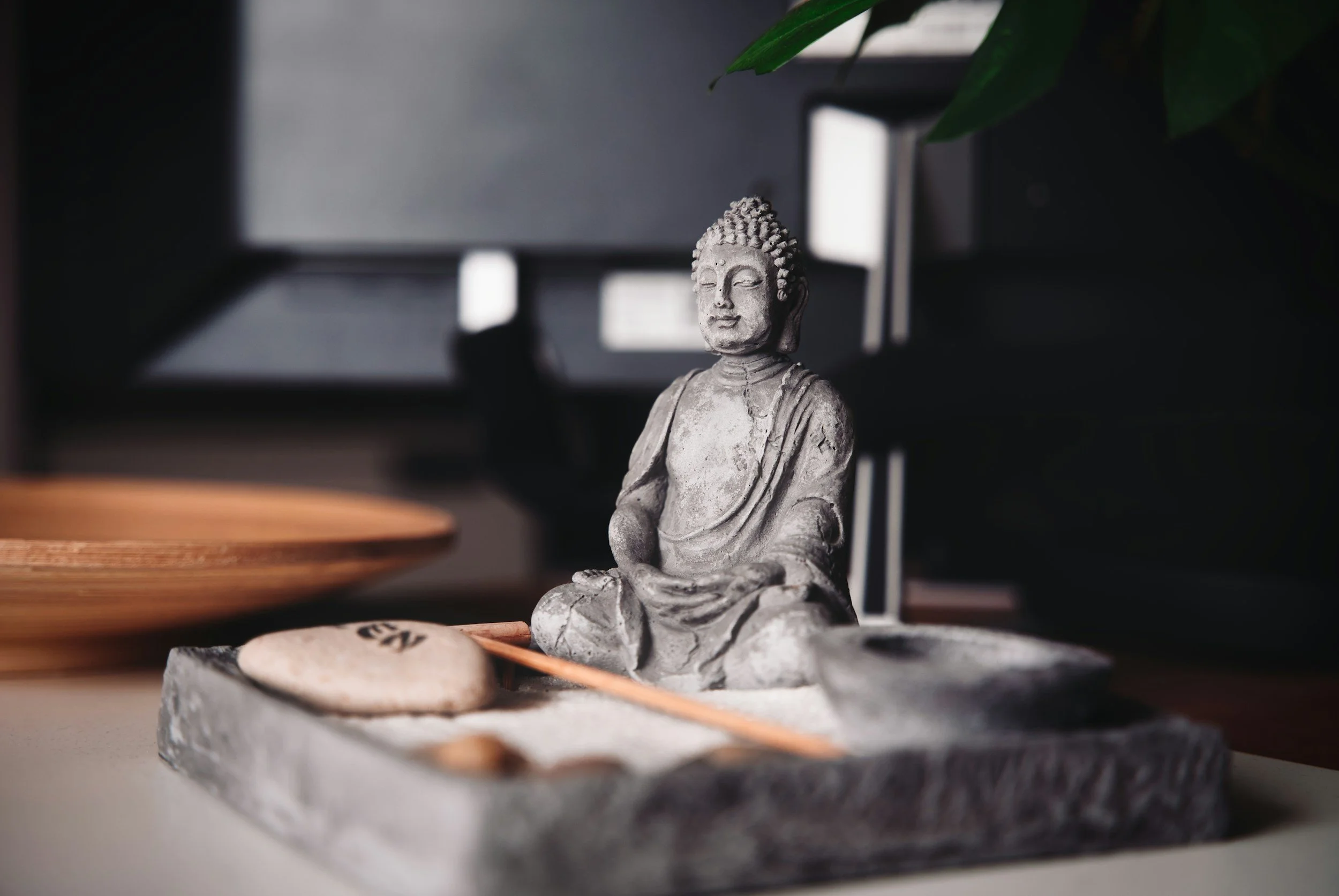
Harmony in the environment brings harmony within
The core principle is Qi—the energy flow connecting all things. When Qi moves freely through our environments, we experience calm; when blocked by clutter, chaos, or poor design, we experience agitation. Research on home environments confirms that restorative interior spaces—characterized by natural materials, proper lighting, and organized aesthetics—significantly reduce stress and enhance psychological recovery.
Practical Feng Shui principles for cultivating stillness:
Declutter ruthlessly. Clutter doesn't merely create visual noise; it generates "emotionally charged" energy that increases stress and decreases productivity. A clean, organized space allows both physical and psychic breathing room.
Incorporate the five elements. Balance earth (stability), metal (clarity), water (flow), wood (growth), and fire (transformation) through thoughtful color choices, natural materials, and strategic placement.
Maximize natural light and air quality. Open curtains, add plants, ensure proper ventilation. These elements directly influence mood and cognitive function.
Create intentional spaces. Designate specific areas for rest, reflection, and renewal—spaces that signal to your nervous system: "Here, you are safe to be still".
Studies show that people in harmoniously designed environments report lower anxiety, improved sleep quality, and enhanced emotional balance. Your outer world shapes your inner landscape; curating environments that whisper "peace" rather than shout "chaos" is an act of self-care.
The Morning Stillness Practice: Beginning Each Day Grounded
Perhaps the most transformative recommendation is establishing a morning stillness ritual—claiming the first moments of each day before the world makes its demands.
Research on morning meditation reveals compelling benefits:
Sets the tone for the entire day. By meditating first thing, you establish psychological and emotional equilibrium, preventing reactivity, stress, and overwhelm from hijacking your state. You ground yourself in calm sovereignty before venturing into daily challenges.
Reduces stress and anxiety. Morning mindfulness activates the parasympathetic nervous system through conscious breathing, creating measurable decreases in cortisol and stress markers that persist throughout the day.
Enhances mental clarity and focus. Morning meditation clears mental clutter, improving decision-making, problem-solving, and creativity. You approach tasks with sharper concentration and less distraction.
Increases energy and vitality. Paradoxically, sitting still generates energy by triggering endorphin release, improving blood flow to the brain, and reducing focus on repetitive anxious thoughts.
Cultivates compassion and emotional resilience. Morning practice reduces stress hormones while increasing empathy, allowing you to engage with others from a proactive rather than reactive state.
Practical Pathways to Stillness: Simple Daily Recommendations
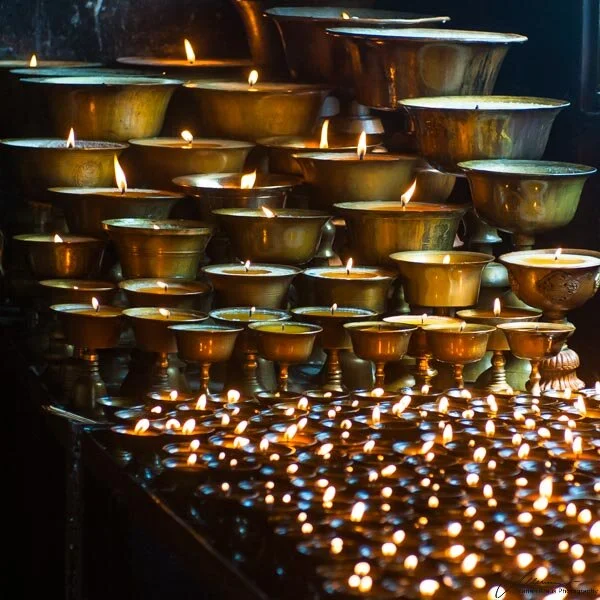
Simple daily practices for far reaching effects
How do we translate this wisdom into lived experience? Here are accessible practices for integrating stillness into even the busiest schedule:
1. The Sacred Morning Ten Minutes
Before checking your phone, before coffee, before the day's demands—sit. Find a comfortable position, close your eyes, and simply observe your breath. Don't force anything; just notice the cool air entering, the warm air leaving. This isn't about achieving perfect meditation—it's about claiming ten minutes that belong only to you and your inner landscape.
2. The Stoic Evening Review
Following Marcus Aurelius's example, spend five minutes each evening reflecting: What went well today? Where did I respond with wisdom rather than reactivity? Where can I grow tomorrow? This practice isn't self-judgment—it's gentle self-examination that builds inner strength.
3. The Humming Reset
Throughout your day, when stress accumulates, pause for three deep breaths paired with humming on the exhale. Feel the vibration in your chest, throat, and skull. This 60-second practice activates your vagus nerve, immediately shifting you from fight-or-flight into rest-and-restore mode. If you wish to intensify the experience, simply cover your ears.
4. The Nature Micro-Dose
You don't need hours in pristine wilderness. Research shows even 20-30 minutes in any green space—a neighborhood park, tree-lined street, or your own backyard—produces measurable stress reduction and mood enhancement. Make it non-negotiable: daily nature time is medicine, not luxury. Step outside the very first thing in the morning, even if for just a minute or two…greet the fresh and pristine day.
5. The Sound Bath Sanctuary
Designate a space in your home for sonic stillness. Use singing bowls, recorded sound healing sessions at 432 Hz or 528 Hz, or simply calming instrumental music. Fifteen minutes of intentional sound immersion can recalibrate your entire nervous system.
6. The Environmental Audit
Walk through your living spaces with fresh eyes. Where does visual chaos assault you? What can be cleared, simplified, organized? Create one "stillness corner"—a chair, cushion, or mat in an uncluttered space designated solely for quiet presence. Let this physical reminder call you back to center.
7. The Digital Sabbath
Institute regular technology fasts—perhaps Sunday mornings, or one full day monthly. Research confirms that constant digital engagement fragments attention and elevates anxiety. Reclaim time for genuine stillness rather than algorithmic stimulation.
The Invitation of This Season
The irony of the holiday season is profound: we celebrate sacred moments by filling every hour with frantic activity. We seek connection through consumption, peace through perpetual motion. Yet the original holy-days were precisely the opposite—designated pauses when ordinary time stopped, and sacred time began.
What if, this season, we reclaimed that original intention? What if we gave ourselves permission to step off the treadmill, to disappoint a few expectations, to say "no" to one more obligation so we could say "yes" to our own inner restoration?
The ancient wisdom traditions—from Stoic philosophy to Buddhist mindfulness to the Map of Consciousness—converge on a singular truth: your inner state determines the quality of your entire existence. No external achievement, acquisition, or accolade can substitute for the groundedness that comes from regular stillness practice.
Marcus Aurelius, commanding armies in brutal winter campaigns, found his strength not in strategy or weaponry but in his capacity to return, again and again, to inner calm. Seneca, navigating the treacherous politics of Nero's court, discovered that tranquility isn't granted by circumstances but cultivated through daily practice. Pico Iyer, after circling the globe, learned that the most profound journey is the one that takes you nowhere at all.
The Practice That Changes Everything
Here's the beautiful secret: you don't need to be perfect at stillness. You don't need hours of uninterrupted meditation, expensive retreats, or guru-level expertise. You simply need to begin.
Ten minutes in the morning. A walk among trees. Three humming breaths when stress rises. An uncluttered corner that welcomes you home to yourself. These small, consistent practices compound over time, fundamentally rewiring your nervous system and reconstituting your relationship with life itself.
The world will continue its manic spinning. Demands will persist. Chaos won't suddenly cease. But within you can exist an unshakeable center—a place of neutrality, clarity, and peace that no external circumstance can touch. This is your birthright, your natural state, the home you've been seeking.
As we move through these final days of the year and into the fresh possibilities of what's to come, may you gift yourself the greatest present imaginable: the art of stillness, practiced with devotion, received with gratitude, shared with all who cross your path.
The sanctuary isn't somewhere else. It's not when everything settles down or circumstances finally cooperate. The sanctuary is here, now, in this breath, in this moment, in your courageous choice to simply stop and listen to the profound stillness that has been waiting for you all along. If you wish assistance with finding it, consider one of my private One-on-One sound session services, one of the retreats and workshops or one of my upcoming group sound meditation journeys.
May you find your stillness. May it find you. And may the harmony you cultivate within ripple outward, becoming the very peace this world so desperately needs.

Finding peace within for creating peace without
This article is informed by extensive research drawing from consciousness studies, Stoic philosophy, contemporary wellness science, and evidence-based practices for stress reduction and mental well-being.